

A new approach and co-creation with stakeholders
Starting this year, almost all countries are required to report indicators of genetic diversity to the Convention on Biological Diversity (CBD). However, it is not possible to assess the genetic diversity of all species in each country – most countries are home to tens of thousands of species. The CBD guidelines recommend selecting a representative set of at least 100 species. One of GINAMO’s goals is to support the species selection process with science-based guidance.
Luckily for us, our collaborators Aapo Kahilainen and Torsti Schulz at Syke (The Finnish Environment Institute) had already developed an approach that they used to select species in Finland. The process standardises and partly automates species selection. GINAMO members Julia Geue and Christina Ritzl Vejlgaard decided to collaborate with them to try out the Finnish approach with stakeholders in GINAMO’s five target countries (Belgium, France, Italy, Norway, Sweden), to see whether it could be adjusted and used beyond Finland. In today’s blog post, Julia answers nine questions about this process and species selection more generally.
Julia Geue is a conservation geneticist at the University of Freiburg, Germany, and a member of GINAMO Work Package 3.
Why is species selection so important in the context of the genetic diversity indicators? Species selection is an essential first step: you need to know which species you want to work on before you can start with the indicator calculation. It is not as straightforward as it might sound, because ideally the set of species should be representative and not biased towards certain species groups, environments, etc. Early in the GINAMO project, we organised country-specific discussions to systematically identify challenges stakeholders face with the CBD indicators; species selection came up as a challenge for all five GINAMO target countries. For example, the stakeholders often wondered whether they should focus on threatened species or not. Such decisions are consequential because they will affect the country-level indicator: if you mostly choose threatened species, that may lower your indicator values.
Earlier this year, the countries needed to send their first reports including genetic indicators to the CBD. How did they select species for that first report? This differed a lot among countries. Some countries had been involved in a pilot study about genetic indicators and used those results in the CBD report, sometimes complemented with additional species. Other countries focused on species on their national Red List; for example, Norway assessed four complete taxonomic groups (e.g., amphibians) based on Red List information. Several countries already have DNA monitoring for some species in place; these are “low-hanging fruit” that were often included as well. A country with a process very relevant for our GINAMO work is Finland: They have developed a method for automating species selection and reducing bias. With a group of experts, they first defined a set of criteria for species selection, and then chose species matching these criteria using a tool they developed. This is what we decided to test in our GINAMO countries.
Can you explain a bit more how this tool works? The tool is an R script called silo. Simply speaking, it needs two things: First, a set of criteria based on which species should be chosen. For example, you might want an even distribution among taxonomic groups, habitats, or threat statuses. These criteria reflect the priorities of the country with regard to monitoring genetic diversity. Second, a species matrix for as many species from your country as possible – essentially a large table which contains the information about each criterion for each species. In the Finnish example, there are about 40,000 species in the country, half of which have Red List data, so Finland decided to use the Red List information to generate the species matrix. This means they ended up with an Excel table with 20,000 rows and one column per criterion, such as taxonomic group. Silo then aims to pick the best combination of species based on the criteria and the species matrix. The advantage of this approach is that it provides a standardised method and reduces the bias you get when picking species manually. If there is a set of species you already know you want to include – such as a set of priority species or the list from the first reporting this year – you can provide that to the tool; it will then select the remaining species to avoid biases as much as possible.
GINAMO has run a series of workshops for stakeholders about species selection. What was the goal of these workshops? The main goal was to test the Finnish approach and the silo tool with the stakeholders in GINAMO’s five target countries (Belgium, France, Italy, Norway, Sweden). We knew that many countries would like to improve their species list for the next reporting in 2029, and we wanted to give some guidance by sharing the approach developed in Finland. At the same time, we aimed to get feedback, since our Finnish colleagues had only tested their tool in Finland so far. In the workshops they got feedback from five more countries about what worked and what didn’t work, and which additional features would be useful. So, the workshops were part of a co-creation process where both the stakeholders and the researchers benefit.
How were the workshops organised? We first made sure to invite a small group of the most relevant stakeholders from each country, especially including the people who have the official mandate to choose the species. We then ran three online events with all five countries together, to ensure that they benefited from each other’s experience. However, we also included time in breakout rooms for in-depth discussions within each country. In the first workshop, we focused on identifying the criteria for choosing species – for example, do you want to cover different ecosystems? Species already monitored in a certain way? Different Red List categories? Each country came up with such criteria and then ranked them. In the second event, the software developers gave us a deep dive into the silo tool. The stakeholders then had the “homework” to create the matrix with all data and test the code for their country. In the final workshop, we looked at the results and gave stakeholders the opportunity to provide feedback about the species selection process and the tool.
What was the outcome of the workshops? This again differed among countries. For example, one of our five pilot countries recently employed an expert specifically tasked with species selection, who could use the workshops to go ahead with this in a very targeted way. Some other countries do not have the responsibilities clearly assigned yet and just benefited from bringing different stakeholders into the same room and learning more about the experiences in other countries. In the end, three of the countries came up with a draft species list using the silo tool. In addition, we got really useful feedback about the silo tool and our approach to species selection in general.
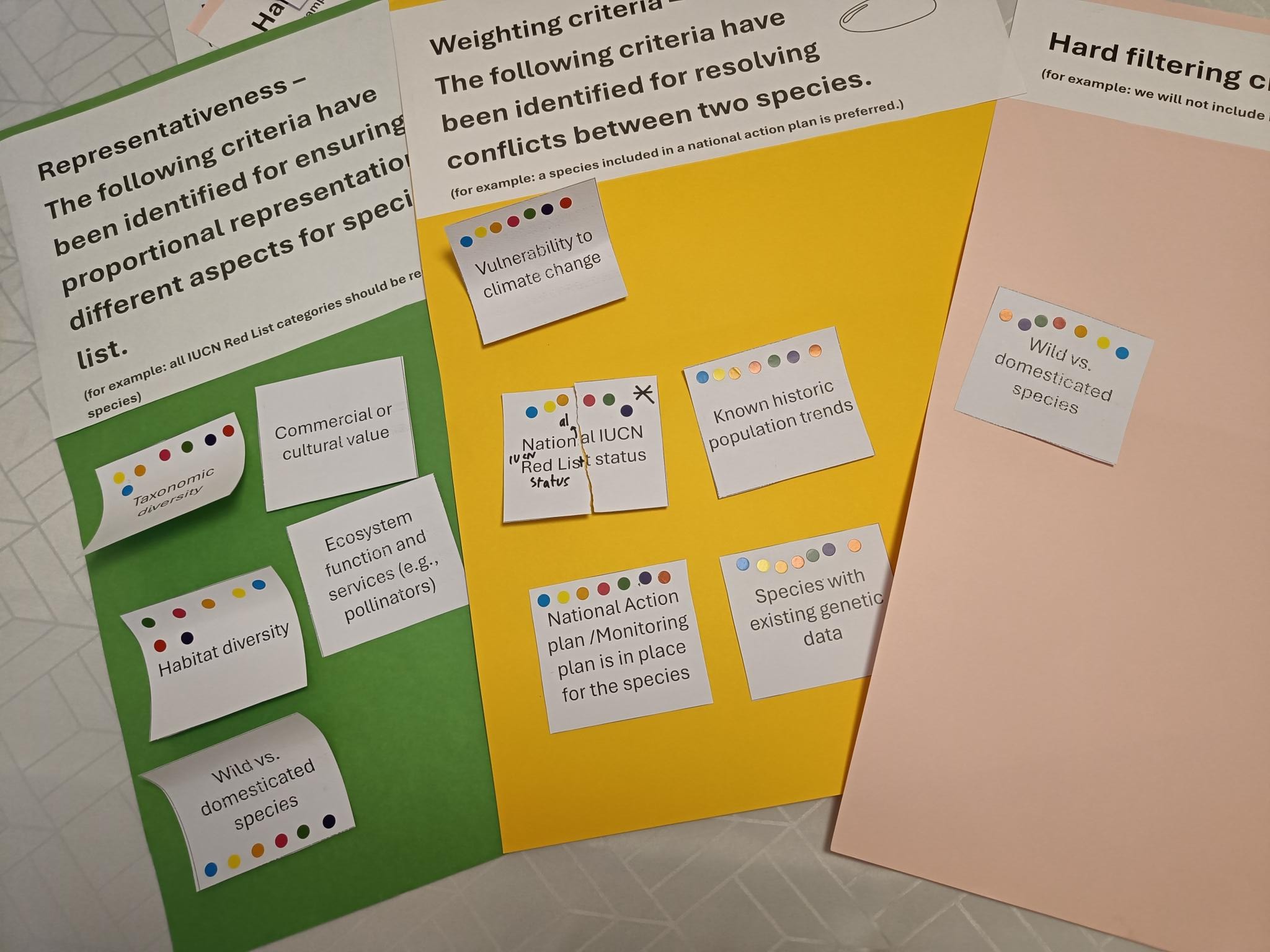
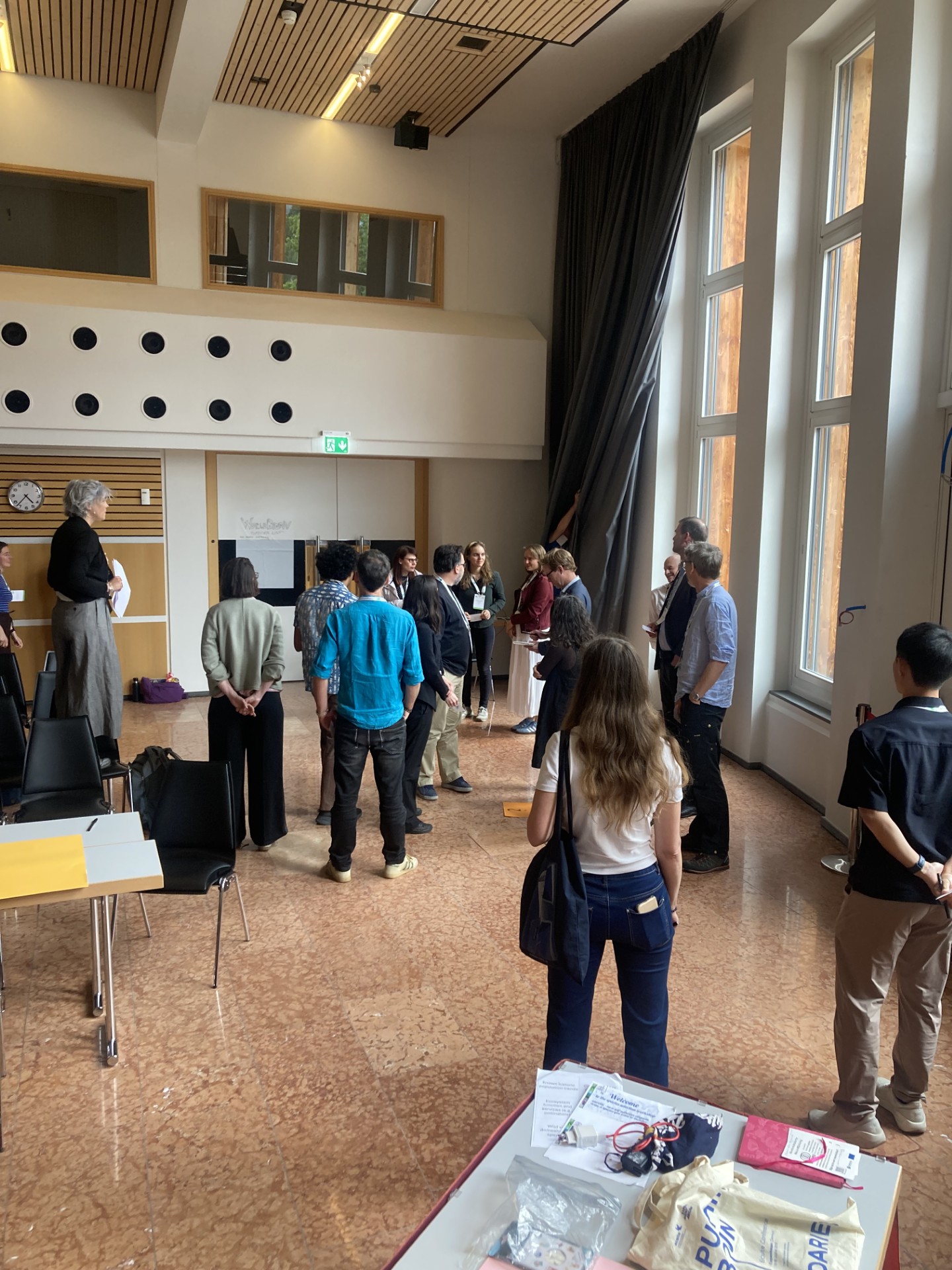
In addition to the three in-depth online workshops, GINAMO also ran a short in-person species selection workshop at the World Biodiversity Forum in Davos this June. Twenty attendees from ten different countries learned more about the importance of species selection and how to develop a set of criteria.
Were you aiming to arrive at similar species lists in all five countries? No. Each country has different priorities and a different political setting. For example, some countries have pre-selected species they will include in their list due to policy-level decisions, and this will affect the rest of the species list. In addition, the species occurring in each country of course differ. The main goal is rather to use a standardised method for species selection. However, I want to emphasise that for countries sharing borders, it does make sense to compare species lists. For example, if Norway includes the brown bear, it makes sense for Sweden and Finland to include it as well, and to collaborate when assessing the species, because those animals can move between countries. In this context, having all countries in the same virtual room was very useful, especially because several of them share borders.
What was the most surprising thing you discovered in the workshops? We thought the discussion of criteria for selecting species and their ranking in the first workshop would be rather straightforward – we did not expect such intense discussions within each country and such a large number of possible criteria listed by the stakeholders! Of course, it is great they’re thinking so deeply about this. Interestingly, even though the countries worked on this separately and came up with numerous criteria, the top five criteria were very similar among the countries.
How should a country that wasn’t involved in the workshops begin the species selection process? The method developed in Finland is extremely useful and received positive feedback, so I would suggest using that. The first step is to consider which stakeholders to include in the process: having a broad range of expertise in the stakeholder group is crucial because this group chooses the criteria used by silo. For example, it makes sense to have experts on freshwater, marine and terrestrial ecosystems, animals and plants, and domesticated species. If possible, the group should include the people who have the official mandate for species selection and are familiar with the government’s requirements. The team should also include people who know how to locate the data for the species matrix. Once this team is assembled, they can work on selecting and ranking the criteria. Together with our colleagues in Finland, we are currently working on guidance materials that describe the full process.
 GINAMO blog